
This post contains affiliate links. If you purchase through them, I may earn a small commission at no extra cost to you.

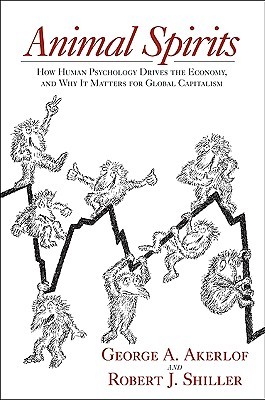
Animal Spirits: How Human Psychology Drives the Economy, and Why It Matters for Global Capitalism by George A. Akerlof
My rating: 4 of 5 stars
Animal Spirits by George Akerlof and Robert J. Shiller delves into the complex and often unpredictable nature of human behavior, and how it affects economic activity. They argue that traditional economic theories, which assume that people act rationally and with perfect information, are inadequate in explaining the booms and busts of the modern economy.
The authors identify several “animal spirits” that drive economic behavior – including confidence, fairness, corruption, and storytelling. They argue that these emotions and beliefs can create self-reinforcing cycles of economic activity, leading to either prosperity or crisis.
One of the strengths of the book is its interdisciplinary approach, drawing on insights from psychology, sociology, and political science to explain economic phenomena. The book is also highly readable, with plenty of real-world examples to illustrate the authors’ points.
However, some readers may find the book’s arguments a bit simplistic or lacking in empirical evidence. While the authors make a compelling case for the importance of animal spirits in the economy, they don’t always provide clear solutions for how to mitigate their negative effects.
Overall, Animal Spirits is a thought-provoking and engaging book that challenges traditional economic thinking and offers a fresh perspective on the role of human behavior in the economy. Anyone interested in understanding the complexities of modern economics would do well to read this book.
Enjoyed this review?
Pick up Animal Spirits — a Nobel laureate’s exploration of how psychology drives economic booms and busts.
Get the Paperback on Amazon →As an Amazon Associate I earn from qualifying purchases.